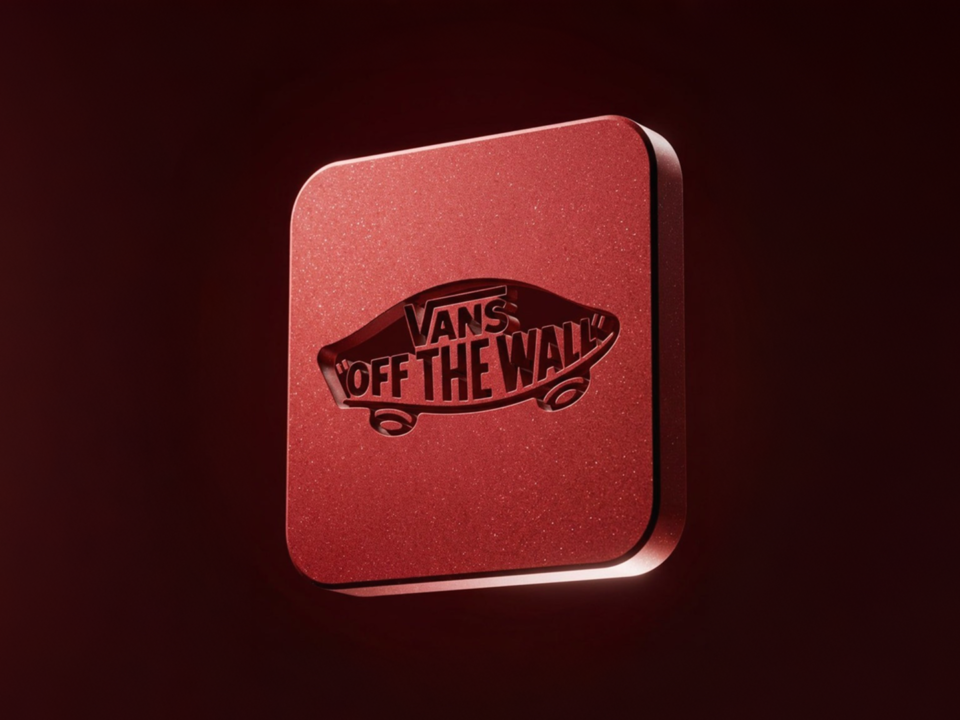
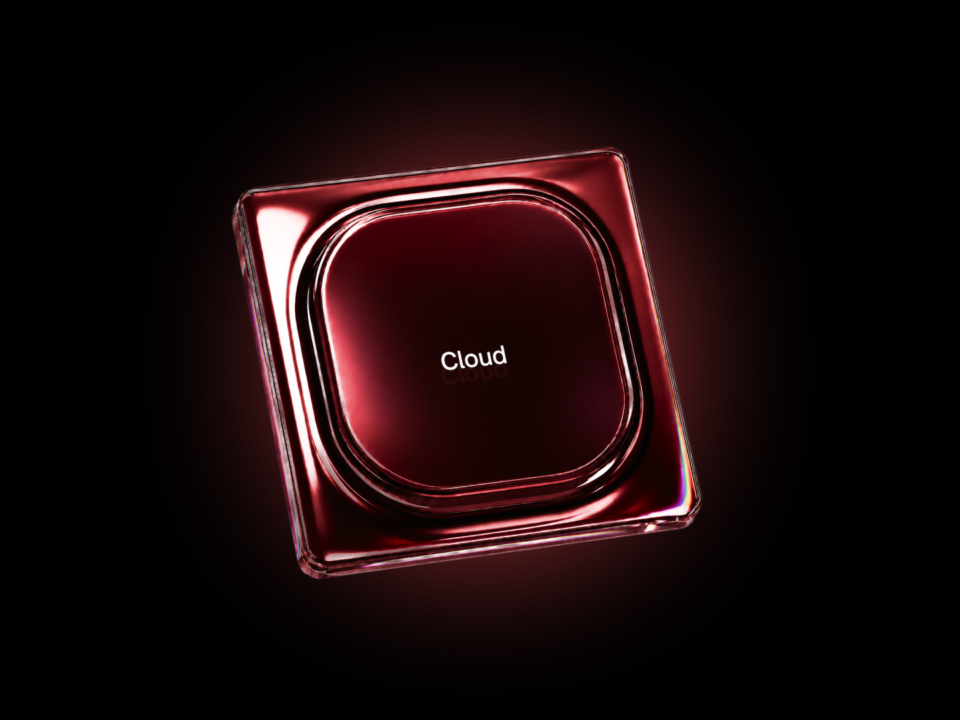
3-variable AI prompt turns any logo into a translucent frozen glass 3D simulation. Ideal for premium brand design assets.
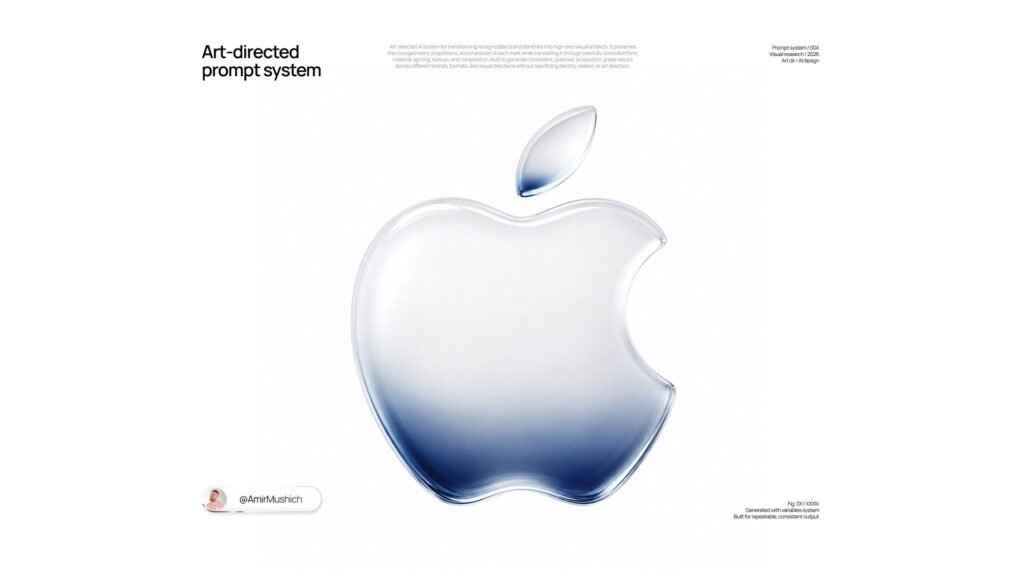
How to use the prompt
Variables: [BRAND NAME], [BACKGROUND COLOR], [LOWER COLOR].
Replace [BRAND NAME] with the logo you want (e.g. Nike), [BACKGROUND COLOR] with the background color (e.g. white), and [LOWER COLOR] with the lower tint (e.g. blue). Then paste the full prompt into GPT Image.
This prompt works great for websites, social media, pitch decks, packaging, or any project that needs polished modern brand visuals.
[BRAND NAME = ______________]
[BACKGROUND COLOR = _____]
[LOWER COLOR = _____________]

Create a square 1:1 high-key studio CGI visualization of the authentic official standalone symbol of [BRAND NAME], physically translated into thick monolithic translucent glass with a near-white optically diffusive character, softly sculpted geometry, a perfectly smooth polished outer skin and localized deep [LOWER COLOR] volumetric absorption.

BRAND ACCURACY

Automatically identify the most recognizable authentic official standalone symbol of [BRAND NAME]. Preserve its canonical silhouette, proportions, stroke relationships, characteristic curves, intersections, internal negative spaces, counterforms and spacing.

Do not redesign, simplify, inflate or reinterpret the identity. Use the official wordmark only if the brand has no recognizable standalone symbol.

If the official symbol contains multiple separated components, preserve them as separate physical glass pieces in their exact relative positions. Do not connect them and do not add a backing plate.

Ignore the logo's native colors. Translate only its authentic geometry into the material and optical system below.

FORM AND CONSTRUCTION

Construct every logo element as a substantial solid piece of optically dense cast glass rather than a thin graphic, acrylic sheet or conventional 3D extrusion.

Preserve the original front-facing geometry while giving the material believable physical thickness.

The front surfaces must be subtly convex and softly crowned rather than perfectly planar. Use broad continuous curvature from the central face toward the perimeter, creating a gently lens-like cross-section.

Edges must transition through generous rounded shoulders into the sidewalls. Use smooth continuous curvature with no visible chamfer line and no conventional hard bevel.

Round exposed stroke endings with large soft radii only where compatible with the authentic logo geometry. Preserve intentional sharp corners, pointed terminals, narrow gaps and structural features belonging to the original identity.

The object should feel precision-cast and optically polished: substantial, continuous and physically coherent.

Do not make the geometry inflated, rubbery, pillowy, tubular or cartoonishly rounded.

Avoid razor-sharp CGI edges, thin acrylic sheets, hollow tubes, metallic frames, backing plates, laminated faces, separate surface coatings or decorative bevel architecture.

MATERIAL SYSTEM

Use one homogeneous translucent glass material throughout every physical component.

The glass should be nearly colorless and extremely pale across most of its volume, with strong internal light diffusion but a perfectly smooth polished exterior.

The outer glass skin is physically continuous, optically smooth and completely textureless at image resolution.

Use restrained satin-polished optical response with surface roughness approximately 0.16–0.22.

The subtle diffused appearance must come primarily from volumetric scattering INSIDE the material, not from a rough, etched, grainy or microscopically textured surface.

The material must exhibit real optical depth through:
refraction,
transmission,
volumetric light scattering,
internal reflections,
Fresnel edge response,
absorption through thicker regions,
subtle thickness-dependent density.

The surface itself must remain visually clean and uniform.

No visible scratches.
No frost particles.
No etched texture.
No micro-bump.
No stippling.
No material grain.
No fingerprints.
No procedural surface noise.

Do not render the object as opaque white plastic, ceramic, resin, chrome, clear acrylic or conventional crystal-clear glass.

The material should feel like optically diffusive solid glass with a perfectly smooth polished outer skin.

OPTICAL DENSITY AND COLOR GRADIENT

This is the defining chromatic feature of the image.

Most of every glass element should remain extremely pale, milky and nearly colorless, partially dissolving into the high-key environment.

Introduce localized optical density toward the physically lower portions of the logo, especially lower curves, downward-facing terminals, lower stroke endings and other geometrically appropriate regions.

[LOWER COLOR] controls the complete chromatic family of this lower optical-density zone.

The color transition must occur INSIDE the glass volume.

It must never look painted, printed, sprayed, coated or composited onto the surface.

Build a continuous volumetric progression derived exclusively from [LOWER COLOR]:

near-colorless milky glass → barely perceptible pale tint of [LOWER COLOR] → softly desaturated version of [LOWER COLOR] → rich saturated [LOWER COLOR] → extremely deep optically dense dark version of [LOWER COLOR].

Preserve the underlying hue identity of [LOWER COLOR] throughout the progression.

Do not automatically introduce cyan, teal, blue, green, magenta or any unrelated secondary hue unless naturally inherent to the requested [LOWER COLOR].

The deepest regions may approach near-black through increased absorption and optical density, but must retain a perceptible undertone of [LOWER COLOR].

Keep the strongest color confined primarily to approximately the lowest 10–25% of the physical form where geometrically appropriate.

Above this region, use a long, soft, extremely continuous transition back toward nearly colorless glass.

Avoid a perfectly straight digital gradient boundary.

Allow optical density to subtly follow curvature, thickness and local geometry so the transition feels physically embedded inside the object.

Treat [LOWER COLOR] as volumetric absorption interacting with transmission, material thickness and internal reflection, not graphic coloration.

Do not uniformly tint the entire logo.

Do not create a [LOWER COLOR] outline.

Do not darken every edge.

Do not apply identical color distribution mechanically to every component.

Allow separated pieces and different strokes to respond naturally to their own geometry while preserving a coherent downward optical-density bias across the complete symbol.

LIGHTING

Create an extremely soft high-key studio environment.

Use one enormous diffused white source positioned frontal and slightly above the object, large enough to wrap almost completely across its visible surface.

Add broad neutral-white environmental fill so the upper and central glass regions remain extremely pale and only subtly separated from the background.

Use a very large soft overhead reflection card to create a broad, low-contrast highlight across upper-facing curved surfaces.

Add one restrained narrow neutral-white reflection card from the upper-right/right side to produce occasional thin Fresnel highlights along selected convex contours.

Use only minimal negative fill, primarily to help define the lower optically dense portions.

The lighting must reveal the object through:
minute luminance variation,
internal scattering,
transmission,
curvature,
Fresnel edge behavior,
optical density.

Do not rely on conventional dramatic light-and-shadow modeling.

No hard key light.
No spotlight.
No dramatic side lighting.
No strong rim lighting.
No hard-edged reflections.
No strong directional shadows.

REFLECTIONS AND SHADING

Keep the reflection environment exceptionally clean and minimal.

Across the pale glass regions, use broad extremely soft neutral-white reflections that blend gradually into the body of the material.

The main front faces should contain large calm tonal areas rather than busy reflection patterns.

Along selected convex edges, allow very thin brighter Fresnel reflections that gently define the silhouette.

These highlights must be physically caused by curvature and angle, not appear as a graphic outline.

Inside the lower [LOWER COLOR] regions, allow deeper, smoother reflections and restrained chromatic internal highlights derived only from [LOWER COLOR].

Use the denser lower glass to reveal more obvious optical depth, thickness and internal reflection than the nearly white upper regions.

The deepest colored areas may become very dark while retaining:
subtle internal transmission,
soft highlight penetration,
visible [LOWER COLOR] undertone.

Do not introduce unrelated reflection colors.

Do not show recognizable windows, studio equipment, room scenery, HDRI landscapes or busy rectangular reflection patterns.

Do not create a continuous bright perimeter around the logo.

Avoid excessive glass edge outlining.

Maintain very low micro-contrast across the pale regions and substantially greater optical density only in the localized colored areas.

SURFACE CLEANLINESS

The entire exterior surface must appear perfectly clean and continuous at image resolution.

No visible texture is permitted on the material.

The perceived softness of the glass must come from optical behavior inside the volume, not texture on its surface.

Preserve perfectly continuous gradients across large areas.

No grain should be visible when inspecting the front face.

No fine sand-like pattern.
No paper-like texture.
No etched haze.
No noisy roughness.
No grain clusters.
No artificial microscopic variation.

The glass may appear optically soft, but never physically grainy.

BACKGROUND

Use [BACKGROUND COLOR] as a seamless matte studio background.

Keep the background clean, calm and very softly illuminated.

Allow only subtle low-frequency tonal variation where required to distinguish extremely pale glass from the surrounding field.

Do not add texture to the background.

If [BACKGROUND COLOR] is light, allow portions of the pale glass to partially disappear into it.

Separation should come from extremely restrained:
edge reflections,
internal scattering,
refraction,
optical density,
minute luminance differences.

Do not artificially outline the object.

The logo floats independently in space.

No floor.
No horizon.
No pedestal.
No architectural environment.
No visible support.

Do not create a visible drop shadow, contact shadow, gray patch, dark silhouette, glow halo or ambient stain behind the logo.

CAMERA AND COMPOSITION

Square 1:1 composition.

Center the authentic logo with generous calm negative space around it.

Keep the complete symbol visible and preserve its natural aspect ratio.

Use a strictly near-frontal camera.

Yaw approximately 0–2 degrees.
Pitch approximately 0–2 degrees.

Use the visual compression of approximately a 100–135 mm full-frame equivalent lens.

Perspective distortion should be extremely low, approaching near-orthographic representation without becoming technically flat.

The logo must read first as its authentic graphic identity and only second as a three-dimensional object.

Do not exaggerate physical depth through perspective.

Keep the complete major geometry sharply resolved.

Use approximately f/8–f/11 depth-of-field behavior.

No macro-style shallow DOF.
No obvious focal falloff.
No blurred front edge.
No artificial bokeh.

Allow only extremely subtle natural optical softness around the brightest translucent contours.

RENDER CHARACTER

Render as physically based path-traced advertising CGI photographed like a restrained high-key medium-format studio product image.

Use physically coherent:
refraction,
volumetric absorption,
internal scattering,
multiple internal reflections,
Fresnel response,
light transmission,
smooth highlight roll-off.

Prioritize clean optical gradients and large uninterrupted tonal areas.

The image should feel gently optically softened rather than digitally razor-sharp, while the actual surface geometry remains precise.

Do not add photographic grain.

Do not add film grain.

Do not add microscopic tonal noise.

Do not add artificial texture to prevent CGI smoothness.

The clean smoothness is intentional.

Prevent a sterile synthetic appearance through physically believable optical complexity, subtle reflection variation, volumetric scattering and natural highlight roll-off rather than grain or texture.

Preserve large quiet areas of nearly white glass and background.

The visual sophistication should come from:
material depth,
transmission,
internal color absorption,
soft curvature,
controlled reflections,
extremely restrained tonal separation.

NEGATIVE CONSTRAINTS

No opaque white plastic.
No ceramic.
No resin appearance.
No chrome or metal.
No thin acrylic.
No glossy acrylic appearance.
No crystal-clear transparent logo.
No uniformly colored glass.
No surface-painted gradient.
No printed color.
No sprayed color coating.
No arbitrary secondary colors unrelated to [LOWER COLOR].
No neon glow.
No emissive colored light.
No colored outline.
No conventional flat-face extrusion with bevel.
No inflated geometry.
No balloon-like geometry.
No rubbery form.
No tubular reinterpretation of the logo.
No excessive rounding that changes the authentic identity.
No hard shadows.
No cast shadow.
No contact shadow.
No pedestal.
No floor.
No horizon.
No visible HDRI environment.
No busy reflections.
No dramatic perspective.
No strong depth of field.
No bloom-heavy highlights.
No additional typography.
No additional branding elements.
No backing plate.

No visible surface grain.
No photographic grain.
No film grain.
No procedural noise.
No micro-noise.
No tonal noise.
No stippling.
No speckling.
No sand-like texture.
No paper-like texture.
No etched-glass texture.
No frosted surface texture.
No bump-map appearance.
No roughness-map noise.
No dithered gradients.
No compression-like texture.
No artificial material noise.

The outer glass skin must remain perfectly smooth, polished, continuous and textureless. All frosted softness must originate from volumetric scattering inside the glass.