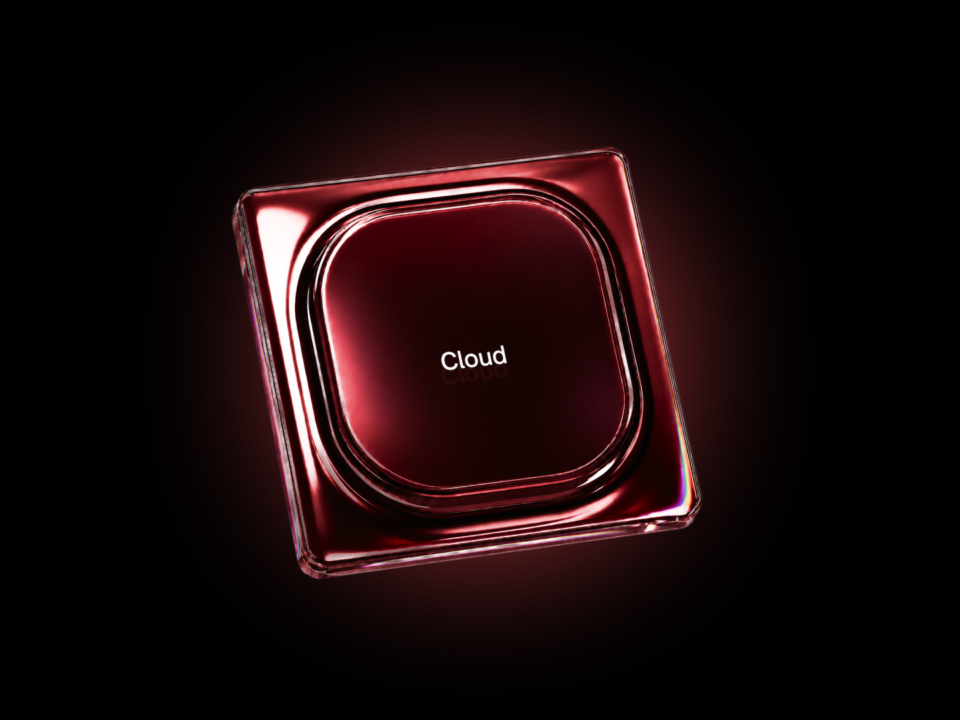
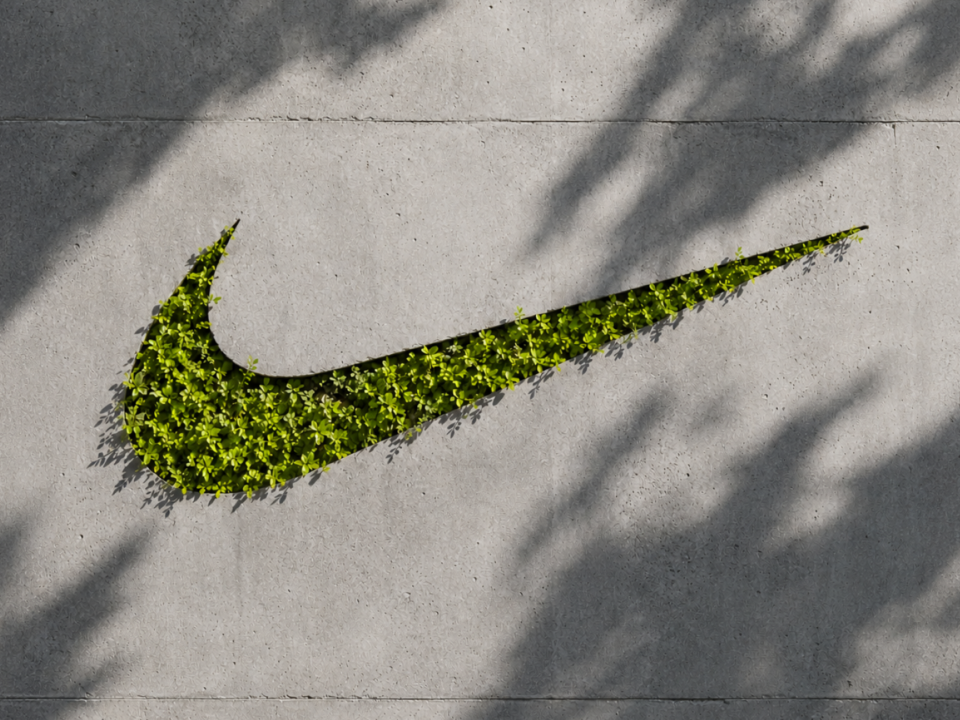
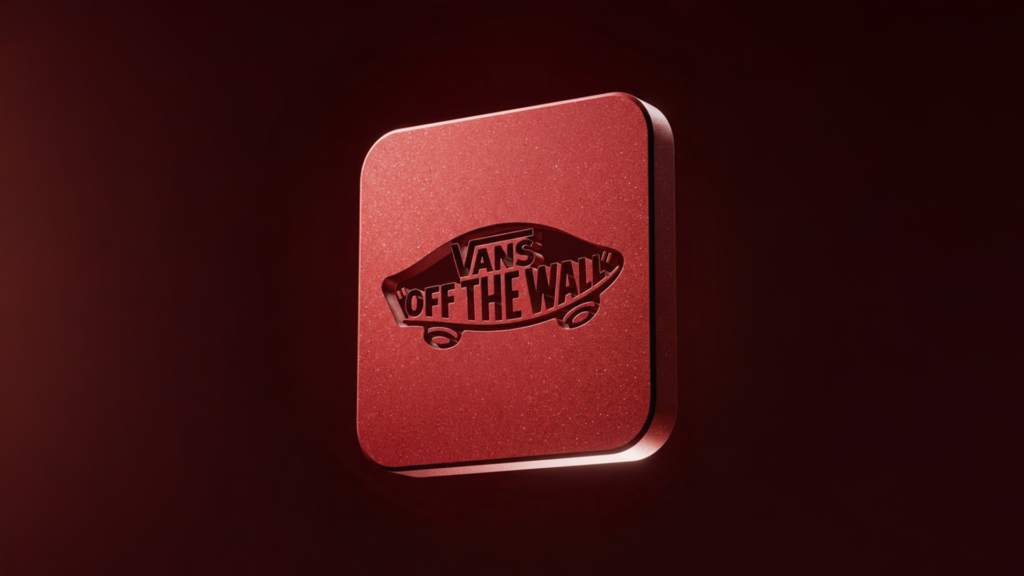
2-variable AI prompt turns any brand into a 3D brand icon render. Ideal for premium brand design assets.
How to use the prompt
Variables: [BRAND NAME], [COLOR].
Replace [BRAND NAME] with the brand you want (e.g. Apple), [COLOR] with the color (e.g. black). Then paste the full prompt into GPT Image.
This prompt works great for websites, social media, pitch decks, packaging, or any project that needs polished modern brand visuals.
[BRAND NAME] | [COLOR]

Act as a CGI Product Photographer and Industrial Design Art Director creating a hero macro shot of a precision-manufactured physical brand object for a tech or design brand campaign. References: Apple product photography, Nothing Phone material campaigns, Bang & Olufsen object photography, Teenage Engineering product shots.

PHASE 0: BRAND LOGO INTELLIGENCE

Retrieve the canonical logo mark of [BRAND NAME] from training data. Identify the primary symbol or icon — the most reduced, geometric version of the brand mark. If [BRAND NAME] uses a wordmark only — take the first letter or most iconic letterform as the cut-through element. If [BRAND NAME] uses an app icon or symbol — use that symbol geometry exactly. The logo must be translated into a cut-through form: the brand mark is realized as negative space — precision-machined holes cut completely through the block, revealing pure void behind. Every element of the logo that would normally be a positive form becomes a through-hole. The logo must be recognizable in its negative-space cutout form.

PHASE 1: SCALE & SPATIAL INTENT — CRITICAL

The block is a small precious object — think coin, medallion, hardware token, or collectible pin. It is NOT a large slab. It is NOT a dominant form. CRITICAL SCALE RULE: the block width occupies exactly 35 to 40% of the total frame width — no more under any circumstances. The surrounding void occupies more than 60% of the total frame area. The object is a centered island of material floating in a sea of darkness. At least 30% of empty space exists on every side — left, right, top, bottom. If the object appears larger than 40% of frame width the image is wrong. The object is discovered within the void — it is not presented, it is found.

PHASE 2: PHYSICAL OBJECT CONSTRUCTION

The hero object is a solid physical block in the form of a rounded square — superellipse / squircle form with corner radius approximately 22 to 25% of total side width. Block thickness: 8 to 14mm — substantial physical depth visible along the right and bottom edges. The block is viewed from a slightly elevated frontal angle — approximately 10 to 15° above perpendicular to the face — revealing the full front face and a sliver of the top edge and right side edge simultaneously. This angle confirms three-dimensionality — it is clearly a solid block, not a flat tile. Edge geometry: front face transitions to side edges via a very subtle chamfer or micro-bevel — 0.5 to 1mm — catching a thin specular line along the illuminated edges.

PHASE 3: COLOR SEPARATION SYSTEM

Object color: [COLOR] — applied as the primary surface material of the block. Background color: autonomously determine a version of [COLOR] that is 2 to 3 full stops darker — deep enough to create clear visual separation while remaining in the same color family. Separation logic: if [COLOR] is dark (black, navy, charcoal) — background shifts toward absolute darkness #000000 to #050505, object surface is lifted 2 stops lighter. If [COLOR] is mid-tone (red, blue, purple, teal) — background is the deepest darkest version of that hue, object is the pure or slightly lighter version. If [COLOR] is light (white, cream, pastel) — background shifts to deep neutral #0A0A0A, object retains its light value for maximum contrast. The cutout through-holes reveal the background color — they are the darkest zone in the image, darker than the object surface, confirming depth and separation.

PHASE 4: MATERIAL SYSTEM

The block material is a matte substance in [COLOR] with a fine mineral speckle texture — powder-coated cast metal, ceramic composite, or engineering polymer with mineral filler. Base tone: [COLOR] at its most saturated and material-accurate value. The material is not flat — it has micro-texture of lighter mineral particles distributed evenly across the entire surface. Speckle properties: individual particles 0.3 to 0.8mm equivalent, color ranging from [COLOR] lightened 40% to near-white. Particle density: moderate — visible at macro distance, not overwhelming. The speckle catches raking light as bright micro-highlights. Surface finish: matte — roughness 0.4 to 0.6, no broad specular reflectivity on face surfaces. Edge finish: the chamfered micro-bevel along illuminated edges has roughness 0.1 to 0.15 — catching the primary light as a thin bright specular line tracing the illuminated perimeter.

PHASE 5: LOGO CUTOUT SYSTEM

The brand mark of [BRAND NAME] is precision-machined through the full block thickness — every positive element of the logo is a through-hole. Cutout precision: edges are razor-sharp — zero-radius tolerance, perfect 90° angle from block face to cutout interior. Cutout interior: the background color from PHASE 3 — darker than the object surface, creating the primary visual tension of the image. The contrast between the [COLOR] object surface and the darker background visible through the cutouts is what