I’m seeing this with clients: once AI is integrated properly, operations get faster. Then marketing improves. Then sales follow.
However, most businesses still market like it’s the early 2020s. They could use AI to move faster, but they don’t know how to start.
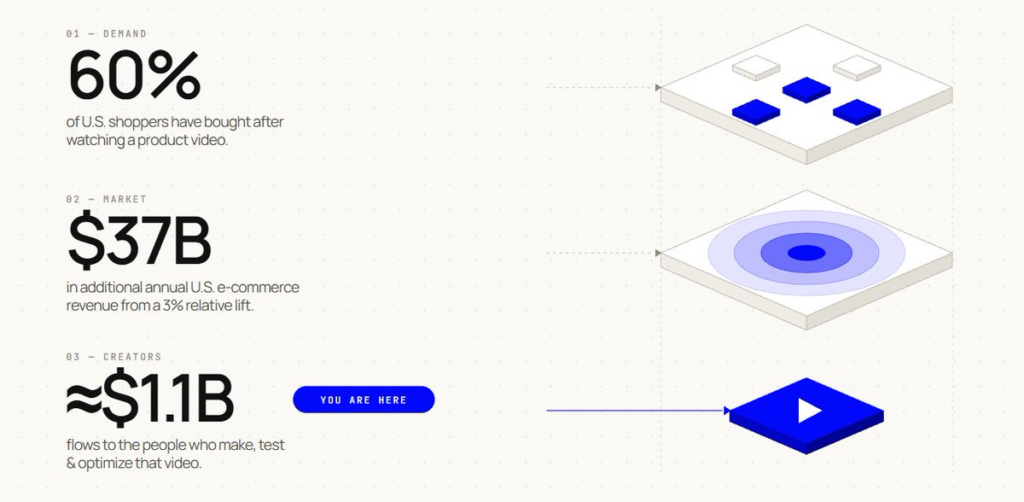
There are 358,000,000 small businesses in the world (Source: Statista) This is a ~2,5-5$ trillion market (Source: Dataintelo) And most of them need help with marketing and content.
This article is sponsored by @OpenArt_ai. Thanks to the team for supporting this post and my work for you.
Example: e-commerce
A lot of product pages fail to answer 3 basic questions:
- What is this?
- What is it for?
- Why should I choose this product?
These are the sales drivers.
Video is the fastest way to explain the product and make it feel desirable. AI makes that cheap enough to give customers a ‘visual validation.’
I found a tool that understands products and marketing. Let’s use it to make product cards convert better.
Repeat the steps below 👇
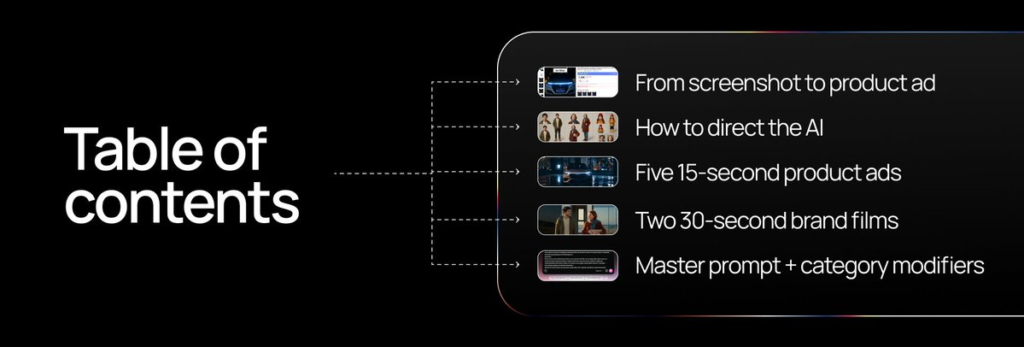
1. SETUP
Product screenshot to video ad
Setup:
- A product reference – even a cheap marketplace screenshot works.
- OpenArt Director – to develop the concept, generate videos, and edit it in one place. → amirmushich.link/director
- A clear prompt – use my Master Prompt below.
One product can support two outputs:
- 15-second product ad: explain what it is, what it does & how it works
- 30+ second ad film: build a human story around the same product
Product clarity first. Cinematics – second.
For a fast product ad:
- Go to amirmushich.link/director
- Upload the product screenshot
- Pick “Just make it” for speed, or “Guide me” to review the storyboard
- Paste the 15-second Master Prompt (see Section 5 below)
Here’s how the full workflow looks:
0:02 / 0:37
Director will guide you through the process – it will help you with scripting, storyboarding, character boards etc – until your video is ready.
For a 30+ sec storytelling ads:
- Open Director
- Upload the product image or a screenshot. The interface supports up to 4 input images – so the more product angles you share, the better
- Describe the human insight, product role, and emotional progression
- Set the duration and review the generated storyboard before refining individual shots
The toolset here is rich enough to produce mini-films. Take 2-3 mins to check the interface – it will boost your productivity.
2. HOW TO DIRECT
For a short ad, the prompt needs to do 3 jobs:
- keep the product recognizable
- make the use case clear
- turn the benefit into an experience that sells
A longer film needs one more ingredient: a human insight
Before writing it, ask yourself:
- Whose life does the product enter?
- What changes emotionally?
- What role does the product play?
- What visual motif can connect the beginning and end?
Here is the 15-second prompt structure I use: (full text prompt below 👇)
3. FAST FORMAT (15 sec)
Five 15-Second Product Ads
Below are 3 real product screenshots I turned into ads with Director.
The goal: keep the product recognizable, make the benefit clear, and upgrade the visual world around it.
Example 1:
LED hood light strip
Why this works: the light strip changes the car’s front profile. Ad angle: Turn a €7 accessory into an ‘a-ha moment’ for auto fans.
Source product from AliExpress:
Director output:
0:00 / 0:15
Prompt variation: Base Master Prompt + Automotive / Accessories modifier * * (find the Market Category Modifiers cheat sheet below 👇)
What I changed:
Show exactly where the LED strip mounts along the hood.
Show a clear off/on comparison of the car’s front profile.
Keep the strip’s length, mounting position, reflections, and light output realistic.
Same product, longer format: I later turned this LED strip into a 30-second Christmas story about a family creating a new tradition. See Section 4 🔽
Example 2:
Cooling phone case
Why this works: The product promise is simple: keep the phone cooler. Ad angle: Make heat dissipation visible through macro texture, airflow etc.
Source product:
Director output:
0:00 / 0:12
Prompt variation: Master Prompt + Tech / Electronics modifier.
What I changed:
Show the case being fitted to the phone and used in a realistic situation.
Include a macro close-up of the perforated shell and ventilation details.
Preserve the exact fit, ports, proportions, and materials. Do not imply active cooling unless the product supports it.
Example 3:
Women’s workout shorts / Fitness apparel
Source product:
Director output:
0:00 / 0:15
Prompt variation: Master Prompt + Fashion / Apparel modifier.
What I changed:
Show the shorts from front, side, and back to prove the fit and silhouette.
Include close-ups of the fabric, seams, waistband, and construction.
Use squats and lunges to demonstrate stretch and support while preserving the real cut, color, and material.
TURN THIS WORKFLOW INTO A SERVICE
Marketplace sellers need short videos for product pages, ads, storefronts, and social media. That creates a practical opportunity for creators: find products with weak visual presentation and offer the seller a clear, ready-to-produce solution.
HOW TO FIND YOUR FIRST MARKETPLACE CLIENT
Amazon service providers can also apply to the official Service Provider Network.
- Find a product that needs demonstration look for promising listings with no video, or content that fails to show installation, movement, fit, use, or the final result.
- Find the business behind the listing search for the brand’s website, public business email, LinkedIn page, or Instagram account. Amazon service providers can also apply to the official Service Provider Network. You can find similar programs on ▶️ Shopify ▶️ Wix ▶️ Squarespace ▶️ Bigcommerce
- Create a private proof of concept make a short storyboard or watermarked sample showing the missing product moment. Keep it private; don’t publish the seller’s assets without permission.
- Pitch the outcome, not the tool Don’t lead with “I make AI videos.” Explain what the listing fails to demonstrate and propose a 15-second video for the PDP, ads, and socials.
- Start with one SKU offer a small paid pilot, then expand into multiple products, new hooks, vertical versions, and longer campaign films.
Important: Don’t use marketplace buyer messaging for cold outreach. Contact the brand through its public business channels or an official service-provider network.
4. LONGER FORMAT – When the Product Becomes a Story
15 seconds is enough to explain a product. But sometimes you need to make someone feel something.
For these films, I kept the same product-first discipline but changed the product’s role. It no longer dominates every shot. It becomes essential to a human story.
15 seconds: make the product clear. 30+ seconds: make the product meaningful & easier to remember.
FILM 1:
LED Hood Light Strip – A New Tradition
Starting point: Example 1 above.
Human insight: After moving to a new city, an eight-year-old boy feels that Christmas has atmosphere disappeared as the family had no time to prepare for it.
Product role: His parents use the LED strip to transform the family car into a moving Christmas light – creating the first tradition that belongs to their new home.

What the longer format added:
- an emotional problem before the product appears
- the product as a family unity center
- a human reaction that gives the product a meaning
Film 2: Capsule Home – Home Is Every Moment You Keep
Starting point: Prefabricated Container House from Aliexpress
Human insight: A home is not only a fixed address. It can be the place that follows a family through different chapters of life.
Product role: The house’s door becomes a recurring visual anchor – opening into new journeys, family moments, and memories.
Long-form structure: A young couple begins traveling together, becomes a family, and returns to the same capsule years later. Landscapes and life stages change while the product remains part of their shared history.

Long-Form Prompt Structure
For a 30-second film, define six things:
- Human insight – emotional setup before the product enters the story?
- Characters – who experiences the change?
- Product role – what does the product allow them to do?
- Visual motif – what image can connect the story?
- Emotional progression – what changes between the 1st and final shot?
- Product resolution – how does the film return to the product value?
The product does not need to be the main character. It needs to be essential to the change.
📋 MASTER PROMPT for 15-Second Product Ads
Use this version when the output needs to survive publishing or client review.
It adds 4 controls:
- Reference analysis – product shape, packaging, material, use case, customer, and emotional promise.
- Clarity control – the product appears clearly in the first 1–2 seconds.
- Creative direction – the ad has a visual world, not random VFX.
- Consistency protection – shape, colors, materials, and proportions stay close to the reference.
Save this prompt, use it forever:
Use all attached images as references for one product commercial.

Create a highly creative premium product advertisement for the exact product shown in the reference images.

Format: horizontal 16:9 cinematic widescreen.
Duration: maximum 15 seconds.
Goal: make the viewer immediately understand what the product is, what it is used for, why it is desirable, and what emotional/visual world belongs to it.

Important:
This must be a clear advertising creative, not an abstract VFX film. Do not begin with random dust, ice, smoke, particles, explosions, liquid, or abstract textures unless the actual product is visible and understandable in the same moment. The product must appear clearly within the first 1-2 seconds.

First, silently analyze the attached references:
Identify the main product, its packaging, shape, label, color, material, ingredients, usage ritual, target customer, desired result, and emotional promise.

Universal creative rule:
Build the concept from the product itself. The ad can be surreal, cinematic, luxurious, playful, futuristic, sensory, scientific, mythic, or dramatic, but it must always stay anchored to the real product and its use.

Ad structure:

0-3 seconds — PRODUCT IDENTIFICATION HOOK:
Open with the product clearly visible in a premium hero shot.

3-8 seconds — USAGE / FUNCTION / TRANSFORMATION:
Show the product being used or interacting with its world in a way that makes its purpose obvious.

8-12 seconds — CREATIVE ESCALATION:
Turn the product's benefit into a memorable cinematic image.

12-15 seconds — FINAL HERO SHOT:
End with a clean, premium final product shot.

Camera:
macro close-ups for texture, clean product hero shots for packaging, hands-in-action for usage, slow luxury push-ins for premium feeling, fast precise cuts for performance.

Lighting:
soft clean light for hygiene, glossy reflections for premium, rim light for silhouette, warm light for comfort, clinical light for precision, dramatic contrast for power.

CRITICAL — Editing:
Do not use morphing transitions. Every cut must be a clean editorial transition: hard cut, match cut, cut on motion, whip-pan cut, or product close-up cut.

Product accuracy:
Keep the product visually consistent with the reference image. Preserve its main shape, colors, materials, proportions.
MARKET CATEGORY MODIFIERS SHEET
The Master Prompt gives Director the structure. The modifier gives it production language: lighting, motion, environment, and tone.
How to use these modifiers:
- Copy the full Master Prompt 👆
- Choose the closest product category below
- Copy its modifier, paste it at the end of the prompt
- Replace any [brackets] with your product details
- Upload the reference and run Director
Tip: if you don’t see your category – feed one of my Modifiers to your LLM and ask to adapt it to your category/market.
| Product category | What the video must prove | Add to the end of the Master Prompt |
|---|---|---|
| Tech / Electronics | Setup, response, or functional change | Show [main feature] during realistic use. Include an interaction shot, a visible response, and a close-up of [physical detail]. Keep interfaces, ports, proportions, and behavior accurate. |
| Skincare / Beauty | Texture, application, finish, or routine | Show the real texture, amount, application, and cosmetic finish of [product]. Use soft light and clean macro details. Do not invent ingredients, medical effects, or unrealistic transformations. |
| Automotive / Accessories | Installation, fit, visibility, or before/after appearance | Show where [product] attaches, how it fits, and the off/on or before/after difference. Keep scale, mounting position, reflections, and light behavior realistic. |
| Fashion / Apparel | Fit, silhouette, fabric behavior, and construction | Show [product] on the body from useful angles. Include texture, seams, fastening details, and movement demonstrating [stretch, support, or drape]. Preserve its real cut, color, and material. |
| Food / Drink | Preparation, texture, serving moment, and appetite appeal | Show [product] being prepared, opened, served, or consumed realistically. Use macro texture and appetite cues. Add steam, splashes, or ingredients only when physically relevant. |
| Home / Lifestyle | Scale, setup, spatial use, and everyday benefit | Establish the product’s real size in a believable environment. Show setup, interaction, and the change created by [main benefit]. Preserve its dimensions and construction. |
| Sports / Fitness | Fit, grip, resistance, support, or movement | Show [product] during its intended activity. Use close-ups of grip, material, contact points, and movement to demonstrate [specific function]. Avoid unsupported claims. |
| Everyday Products | One simple problem and one visible payoff | Use one sequence: [problem] → [product action] → [visible result]. Show the product immediately and increase perceived value without disguising what it is. |
My main point is simple:
AI can become your money printing machine. But most clients live outside of the twitter bubble.
- Ask your LLM where & how to position yourself
- Create a promo-pack (copy + visuals)
- Reach out to businesses
You will need content, but first you need an intent.
Use Director for speed when the product needs to be understood. Use Short Film when the product deserves to be remembered.
→
Save this article and start creating for real, not for fun.